
𝐂𝐨𝐨𝐤𝐢𝐧𝐠 𝐠𝐚𝐬 𝐩𝐫𝐢𝐜𝐞𝐬 𝐬𝐞𝐭 𝐭𝐨 𝐫𝐢𝐬𝐞 𝐢𝐧 𝐤𝐞𝐧𝐲𝐚 𝐚𝐬 𝐠𝐥𝐨𝐛𝐚𝐥 𝐥𝐩𝐠 𝐜𝐨𝐬𝐭𝐬 𝐜𝐥𝐢𝐦𝐛
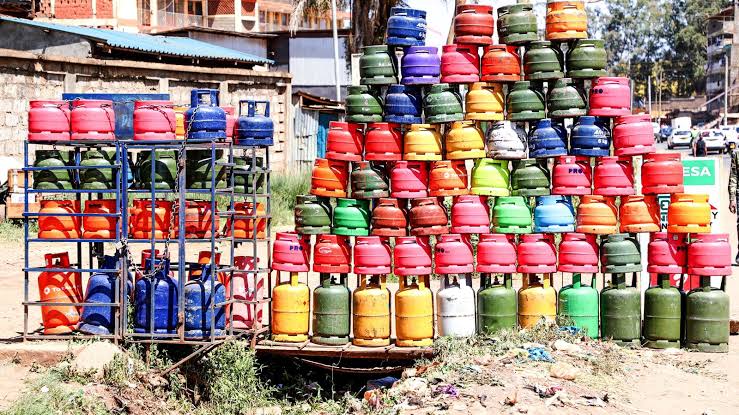
Photo Courtesy of Business Daily
Kenyan households that use cooking gas could pay more from October after international prices of propane and butane, the two main components of liquefied petroleum gas (LPG), increased amid disruptions to energy supplies in the Middle East.
Petroleum industry executives told Business Daily that the rise in international LPG costs is expected to push up prices in Kenya, where the country relies heavily on imports from Saudi Arabia and other Middle Eastern suppliers.
Data from Saudi Aramco shows that the price of butane increased by 25.8 per cent, rising from $499 (about KSh64,620.50) per tonne in August to $628 (about KSh81,326).Propane prices also rose by 23.2 per cent, from $401 (about KSh51,929.50) to $494 (about KSh63,973) per tonne.
Saudi Aramco’s contract prices are an important benchmark for LPG markets in the Middle East and Asia-Pacific region.
An executive from a leading Kenyan oil marketer said the increase in international prices would eventually be felt by consumers.
“LPG prices should go up next month, and this mainly boils down to the Saudi Aramco CP (contract prices). Average prices of butane and propane have significantly gone up this month, and this will affect local prices next month,” the executive told Business Daily.
Middle East conflict disrupts suppliesThe price increase comes amid renewed fighting involving the United States and Iran, which has disrupted shipping and energy supply routes in the Middle East.
The Strait of Hormuz, a key route for global energy shipments, has faced severe disruptions, forcing Saudi Arabia to rely more on alternative export routes such as the Yanbu terminal on the Red Sea.
Data reported by OPIS shows that LPG shipments from Yanbu to Asian markets fell from 302,600 tonnes in June to 240,300 tonnes in July, before dropping sharply to 71,200 tonnes in August.
Preliminary estimates put September exports at about 51,700 tonnes, pointing to continued pressure on supplies.The tighter supply has contributed to higher international LPG contract prices, increasing the cost faced by importers.
What Kenyan consumers are payingLPG prices in Kenya vary depending on the brand and distributor because, unlike petrol, diesel and kerosene, cooking gas retail prices are not capped through EPRA’s monthly pricing system.
Business Daily reported that a 13-kilogramme cylinder was selling at about KSh3,400 at TotalEnergies and KSh3,225 at Rubis at the time of publication.The prices were lower than the levels recorded in May, when local LPG prices rose by more than KSh390 following an earlier increase in Saudi Aramco’s prices.
Another industry executive warned that the pressure on international prices could continue to affect the Kenyan market.
“Right now, with the geopolitical dynamics, the cost is going up, and local prices will definitely increase,” the executive said.
Taifa Gas terminal nearing completionThe expected increase comes as Kenya prepares to expand its LPG storage and import capacity through a major facility being constructed by Taifa Gas at the Dongo Kundu Special Economic Zone in Mombasa.
The KSh16 billion project has a planned storage capacity of 30,000 metric tonnes in 12 spherical storage tanks. The 30-acre facility has provisions for future expansion.
According to the Kenya News Agency, construction of the terminal is in its final stages, with testing of the storage tanks underway. The company plans to commission the facility in October 2026.
The terminal will receive LPG through a dedicated 3.5-kilometre pipeline connecting the Kipevu Oil Terminal to the Dongo Kundu facility.
Taifa Gas says the project is intended to increase LPG storage, improve supply reliability and introduce greater competition into Kenya’s bulk cooking-gas market.
The facility is expected to become one of the largest LPG storage terminals in East Africa, with the capacity to expand to about 45,000 tonnes in future.
For Kenyan households, however, the immediate concern remains the international LPG market, with higher propane and butane prices likely to put further pressure on the cost of refilling cooking-gas cylinders in October.